Home > Electrodes > Alloy 309LMo SAW and Flux
Harsh Metalloys, a leading manufacturer and supplier in Mumbai, India, offers premium-quality Alloy 309LMo SAW Wire and Flux, specifically designed for Submerged Arc Welding (SAW) applications requiring superior corrosion and heat resistance. This alloy is a modified version of 309L, with added molybdenum for enhanced pitting and crevice corrosion resistance. It is ideal for welding stainless steel and dissimilar metals in high-temperature and chemically aggressive environments. Harsh Metalloys ensures consistent quality, excellent arc stability, and low spatter levels, supplying SAW wire and flux combinations tailored to customer requirements across petrochemical, marine, and power generation industries.
Alloy 309LMo SAW wire and flux consist mainly of chromium (23–25%), nickel (12–14%), and molybdenum (2–3%) with minimal carbon content, for increased corrosion resistance and lower intergranular attack risk. Mechanical properties are a tensile strength of around 570 MPa, yield strength of about 350 MPa, and excellent ductility. The addition of molybdenum enhances resistance to crevice corrosion and pitting in chloride-containing environments. The electrodes are suitable for overlay welding, buffer layers, and welding dissimilar metals exposed to aggressive chemical or high-temperature environments.
| Classification | AWS A5.9, 309LMo |
| Form | Welding Fluxes and Wires |
| Type Of Welding | Submerged Arc Welding |
| Thickness available | Upto 4 mm |
| AWS 309LMo SAW & Flux Application & uses |
|
| C | Mn | Si | Cr | Ni | S | P | Mo | Cu |
| 0.03 max | 1.0-2.5 | 0.30-0.65 | 23-25 | 12-14 | 0.03 max | 0.03 max | 2-3 | 0.75 max |
| Tensile Strength | 89,900 |
|---|---|
| Yield Strength | 63,800 |
| Elongation (%) | 42% |
Contact us to get a quick quote for your requirement.
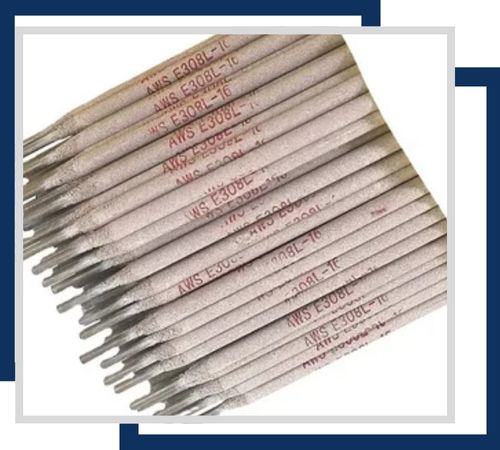
Designed for submerged arc welding, this wire offers excellent corrosion and heat resistance, ideal for stainless steel and dissimilar metal welds in harsh environments.
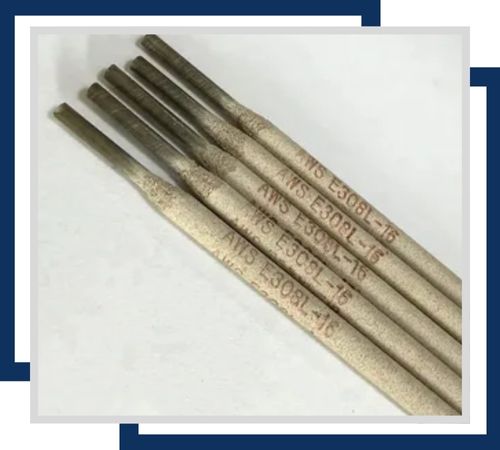
Engineered for industrial welding, it delivers strong, corrosion-resistant welds with smooth finish, suitable for pressure vessels, piping, and chemical processing equipment.
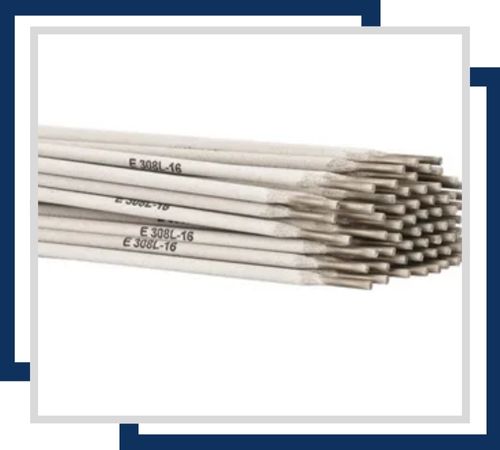
Conforms to SFA A5.9 standards, providing superior weld integrity and resistance to oxidation and acids, perfect for high-temperature and corrosive industrial applications.
Alloy 309LMo SAW and flux find extensive application in those industries which require high resistance to thermal cycling, corrosion, and oxidation. Some of the typical uses are welding heat exchangers, pressure vessels, reactors, storage tanks used in the chemical, petrochemical, and pulp and paper industries. They are also recommended for welding dissimilar metals like stainless to carbon steel, particularly in high-temperature applications. Their high weldability, good arc stability, and low spatter content qualify them for automated and mechanized welding operations, which maintain long-term dependability and performance in essential fabrication applications.




©2024 Harsh Metalloys All Rights Reserved.